The invitation says black tie. You own a good black suit, and it is a very good black suit. Is that close enough?
It is the question we are asked more than any other about evening wear, and the honest answer is: nearly, but the gap is more visible than most people expect, and it shows up in photographs before it shows up in the mirror. Here is what actually separates a dinner suit from a business suit, and what to do if you own one and need the other.
Tuxedo, dinner jacket, dinner suit
These are three names for the same garment, and the confusion is geographical rather than sartorial. In Britain, the jacket is a dinner jacket and the jacket and trousers together are a dinner suit. In America, the whole outfit is a tuxedo, after Tuxedo Park in New York, where it took hold in the 1880s. Nothing about the garment changes with the word. If an invitation asks for black tie, a dinner suit answers it and so does a tuxedo, because they are the same thing.
The garment is younger than most people assume. Until the 1860s, formal evening dress meant tails. The short jacket was commissioned from Henry Poole on Savile Row by the future Edward VII, who wanted something less rigid to wear at home. Like most good ideas, it escaped.
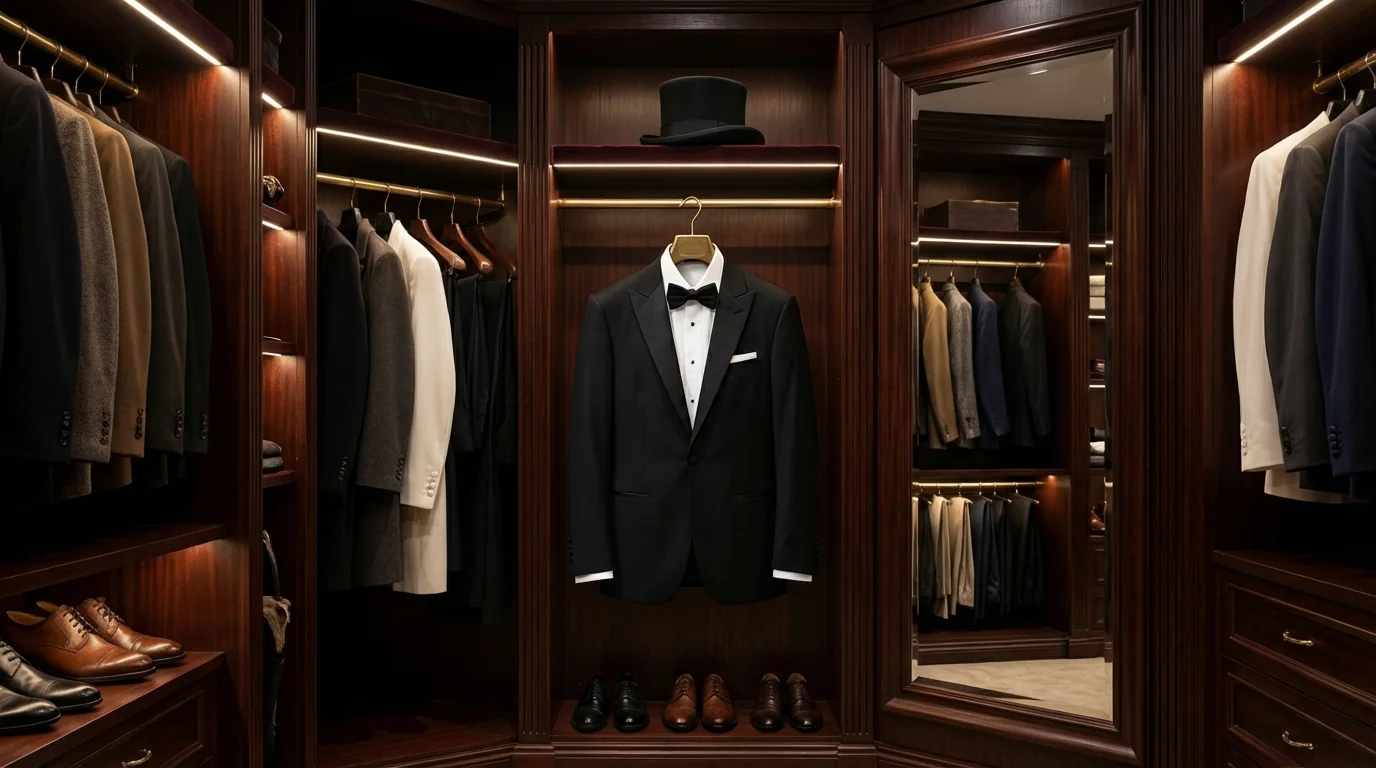
The five things that make it a dinner suit
Strip away the ceremony and the differences are specific and countable. A dinner suit has silk where a business suit has cloth, and almost every other detail follows from that one decision.
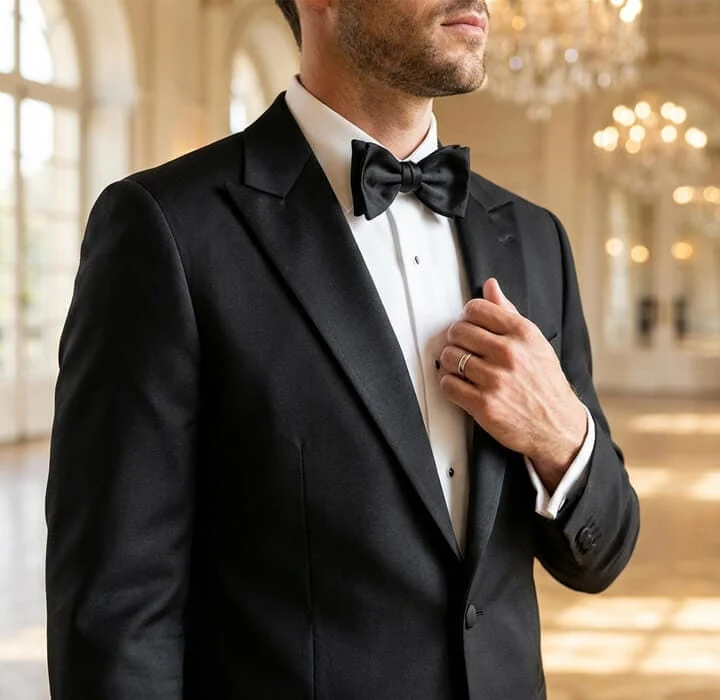
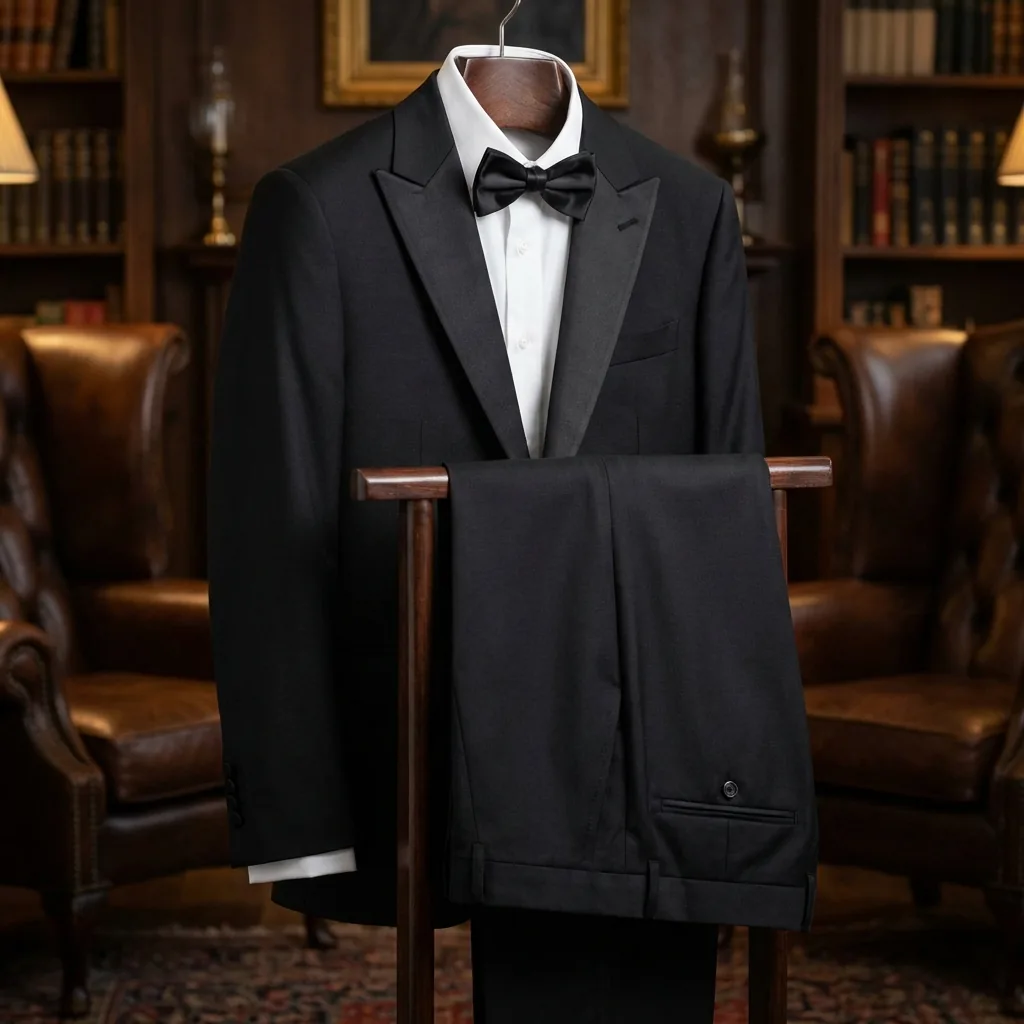
Silk on the lapel. The facing is satin or grosgrain. Satin has more sheen and catches the light; grosgrain is a ribbed weave that reads quieter and, to a lot of eyes, better. This is the single detail that carries the outfit, and it is the one a business suit cannot fake.
A braid down the trouser. A silk stripe runs the length of the outside seam, matching the lapel facing. It is the reason dinner suit trousers cannot be swapped for the trousers of a business suit without the whole thing coming apart.
No belt loops. The waistband is held by side adjusters or braces. A belt breaks the line and interrupts the waist covering, which is why evening trousers have never had loops.
Buttons that do not compete. Covered in the same silk as the lapel, or dark horn. Nothing bright, because the eye should go to the facings and the shirt front, not to the fastenings.
One button, and usually no vent. A dinner jacket fastens on a single button and hangs cleanly at the back. A business suit often has two buttons and side vents built for sitting at a desk and getting in and out of cars all day. Evening wear is cut for standing up in a room.
So can you wear a black suit instead?
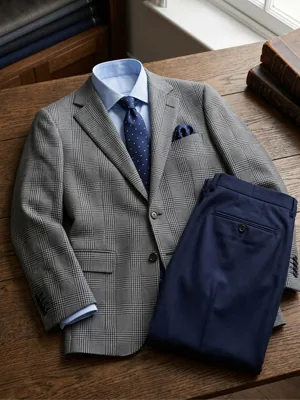
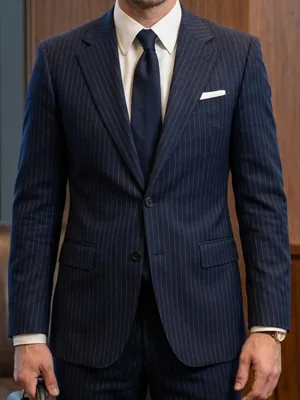
At a strictly black tie event, you will read as underdressed the moment you stand next to someone in a dinner suit, and it will be the silk that gives it away. Under chandeliers and candlelight, satin and grosgrain catch and hold the light. Worsted business cloth absorbs it. In a room where everyone else is quietly reflecting, the matte suit looks flat, and photographs make it worse rather than better.
That said, there is a version of the evening where it works. If the invitation says black tie optional, a dark suit is genuinely acceptable and nobody is counting. If you are going anyway and a dinner suit is not happening this time, get as close as you can: the darkest suit you own rather than the black one if the black one has gone slightly green with age, a crisp white shirt, a proper bow tie rather than a long tie, and black leather shoes polished past the point you think is necessary. What you are doing is borrowing the signals of the code without the garment, and it holds up better than people expect.
Black or midnight blue
Both are correct, and the choice is less obvious than it looks. Midnight blue was developed specifically for artificial light, where it reads richer and marginally darker than black rather than flattening out. It is the reason it photographs so well indoors, and the reason a lot of tailors quietly prefer it.
Black remains the more traditional answer, and the safer one if this will be the only dinner suit you own. If you expect to wear it often enough to justify a second, most people buy black first and midnight second, then find themselves reaching for the midnight.
Peak lapel or shawl collar
A peak lapel is the sharper of the two. It draws the eye up and out, broadens the chest, and carries a slightly more formal register. A shawl collar is the older shape, softer and less severe, and it suits a rounder face or a less structured evening.
The one to avoid on a dinner jacket is the notch lapel, which is the business suit shape. Faced in silk it reads as a work suit that has borrowed some evening detailing, which is exactly the impression the whole exercise is meant to avoid.
The waist should be covered
This is the rule most often skipped and most worth keeping. Black tie assumes something across the waist: a low-fastening evening waistcoat, or a cummerbund with the pleats facing up. Both exist to hide the join between shirt and trouser waistband, which is otherwise the least composed part of the outfit every time you move.
A double-breasted dinner jacket needs neither, because it stays fastened and covers the waist itself. That is a large part of its appeal for anyone who finds a cummerbund fussy.
What the other dress codes actually mean
Black tie optional means the host is telling you a dinner jacket is welcome, not required. Wear one and you are correctly dressed rather than overdressed. Wear a dark suit and you are also correctly dressed. It is one of the few dress codes that genuinely means what it says.
Creative black tie keeps the structure and moves the colour or the cloth. Velvet, midnight blue, deep green, a patterned dinner jacket with plain evening trousers. The bow tie stays, the silk stays, the braid stays. What changes is the surface, and the change should look deliberate rather than improvised.
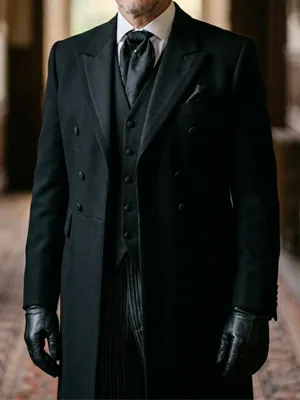
White tie is a different code entirely, and stricter. A black tailcoat that fastens nowhere, a white marcella waistcoat, a wing collar shirt and a white bow tie. If your invitation says white tie, a dinner suit will not do, and this is the one occasion where turning up in the wrong thing is genuinely noticeable.
Hiring against owning
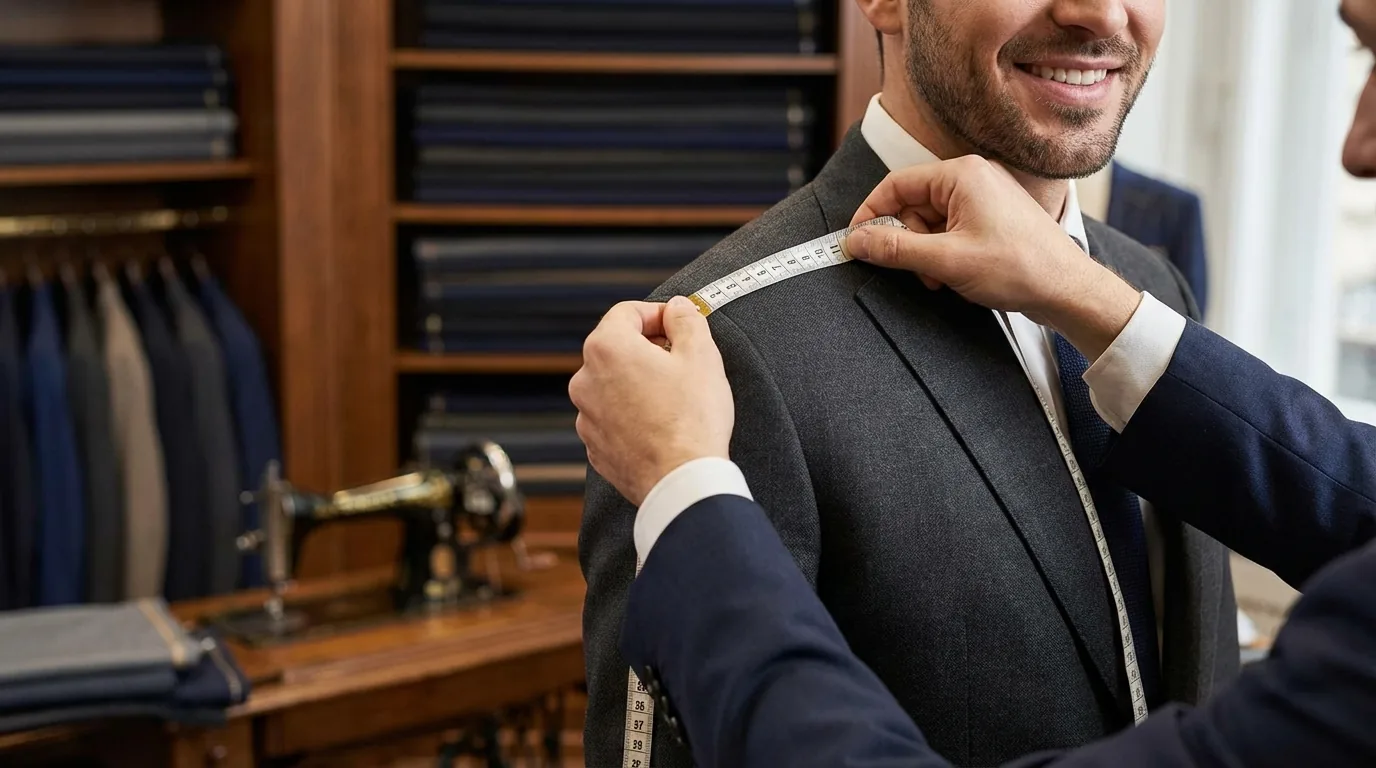
A hired dinner suit gets the code roughly right and the fit entirely wrong, because it was cut for somebody else and a dinner jacket sits closer to the body than a business suit does. The shortcomings that a lounge suit can absorb, evening wear puts on display.
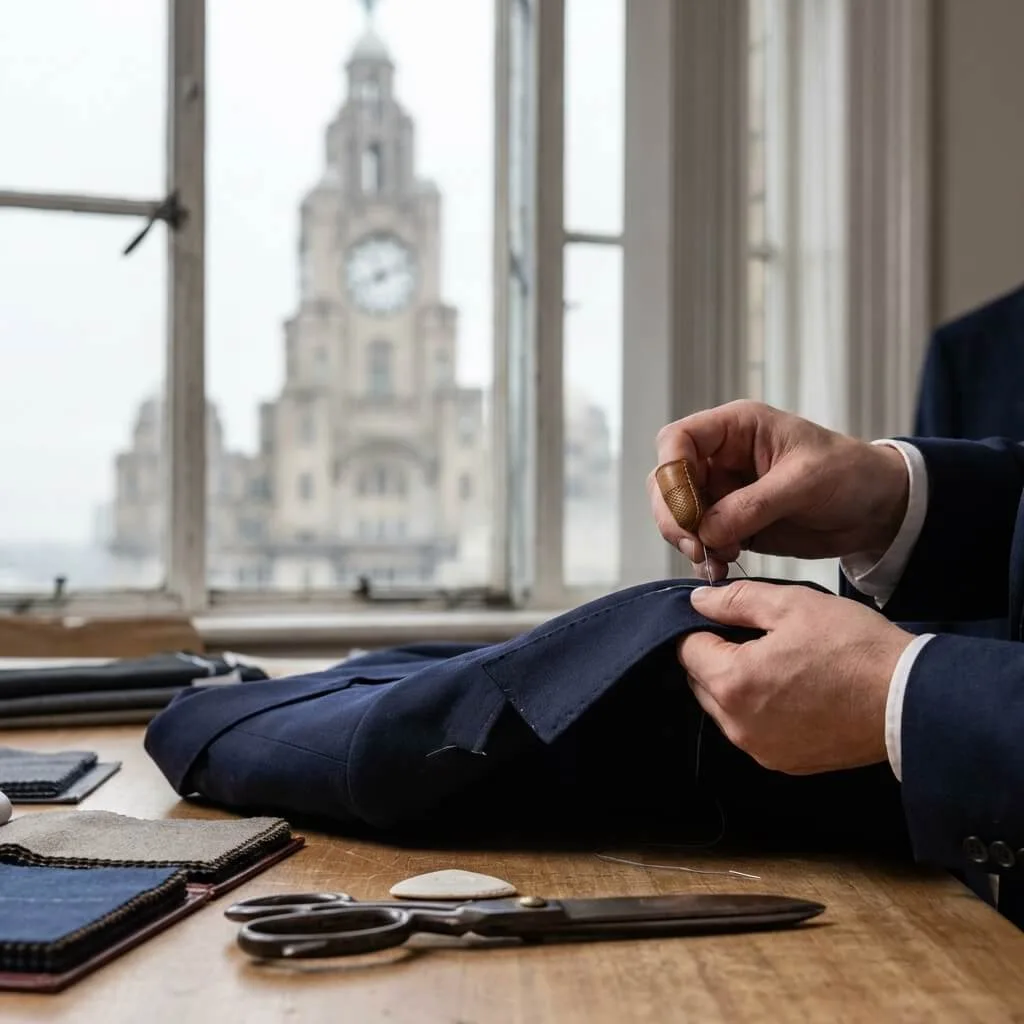
The arithmetic is also worth doing honestly. Black tie comes round more often than most men expect - a wedding, a client dinner, an awards evening, a charity ball - and three or four hires will usually meet the cost of owning something cut to your own pattern that fits every time and never needs returning on a Monday morning.
If you want to see the choices laid out - lapel and facing, cloth, the codes and what we would cut for each - our bespoke black tie and dinner suits page covers them. And if the occasion is your own wedding, wedding suits is the place to start instead - or prom and graduation if it is a first black tie rather than a last-minute hire.