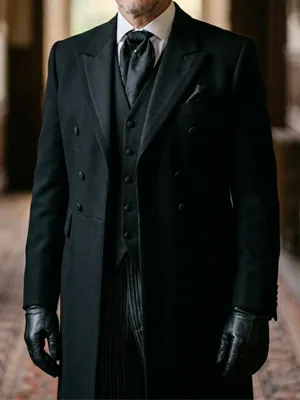
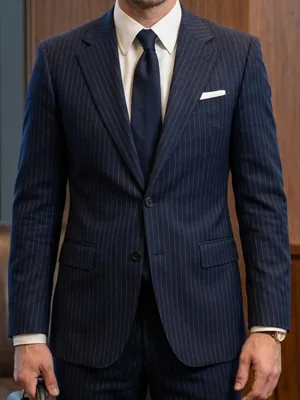
The fabric you choose for a wedding suit has to do more work than almost any other garment you'll own. It needs to photograph well in daylight and under evening lighting, survive a full day of standing, dancing, and sitting, and still look composed at the end of it. Cut matters, but fabric is where most of that performance actually comes from.
Weight and season
For a spring or summer wedding, something in the 9-11oz range gives you structure without the heat. Lighter open-weave wools and wool-linen blends breathe well and resist creasing better than people expect. For autumn and winter weddings, a 12-13oz worsted wool holds its shape through a long day and adds a bit more visual weight in photographs.
Avoid going too light purely for comfort - very lightweight cloth can look thin in photographs and crease more readily under a day of movement.
Colour considerations beyond the obvious
Navy and mid-grey remain popular for good reason - they photograph consistently across different lighting conditions, from outdoor ceremonies to dim reception venues. Lighter tones like stone or soft sage can look beautiful in person but shift unpredictably under artificial light, so it's worth seeing a swatch in both daylight and evening lighting before committing.
Texture over pattern
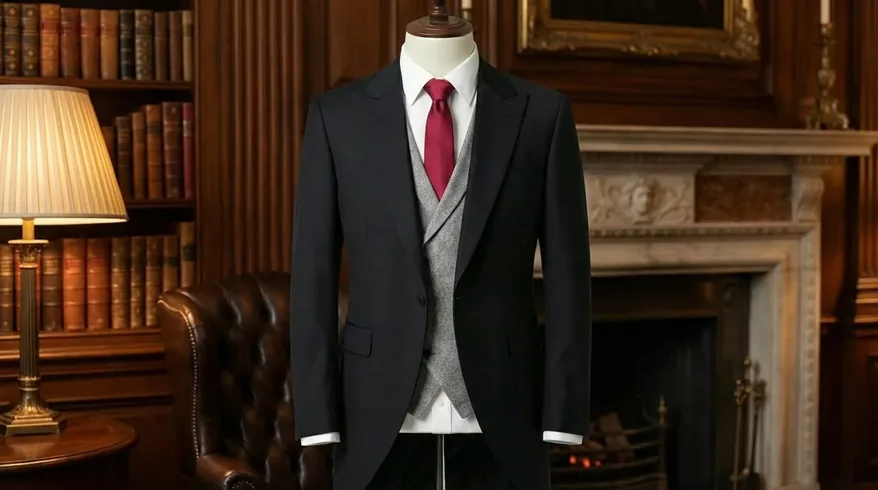
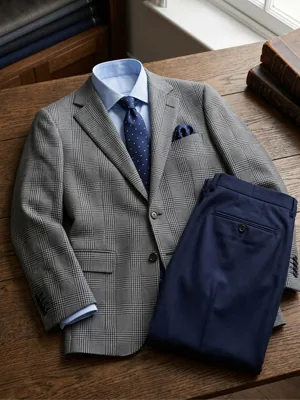
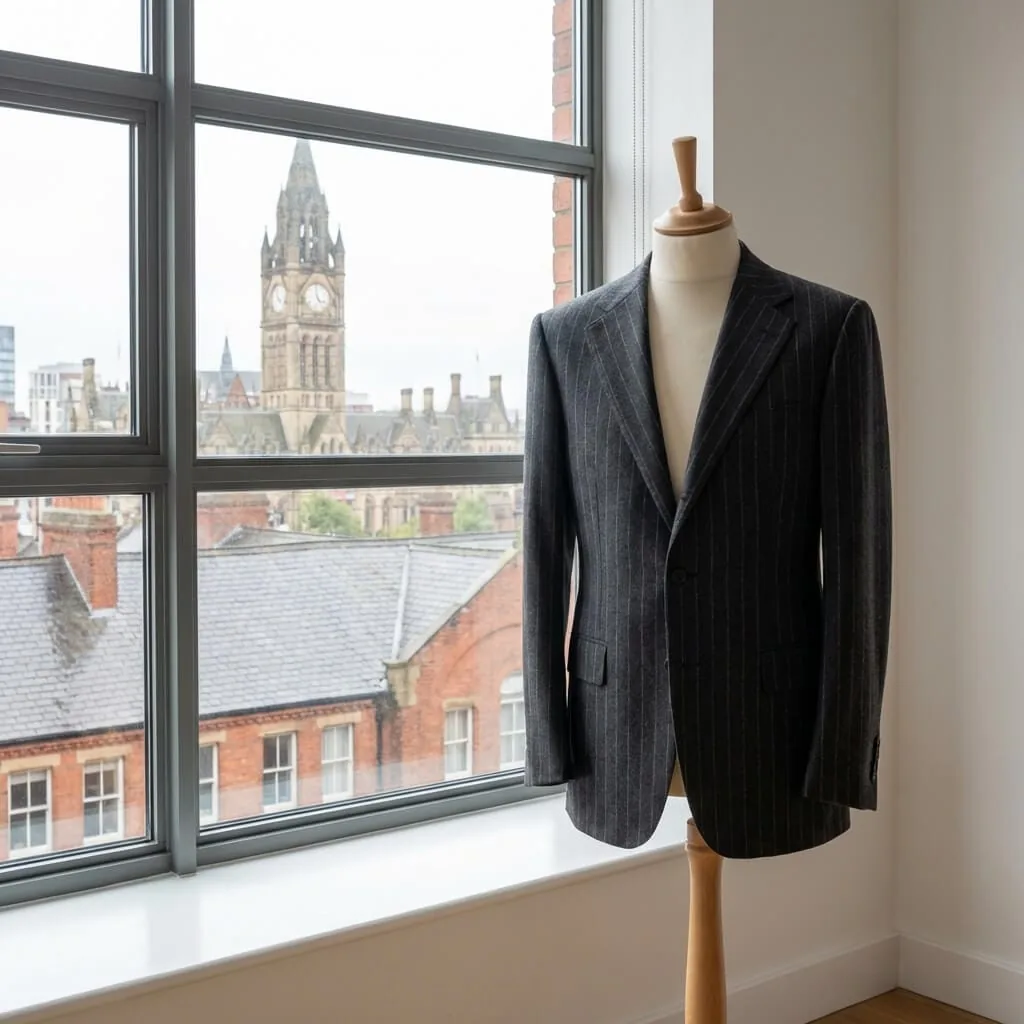
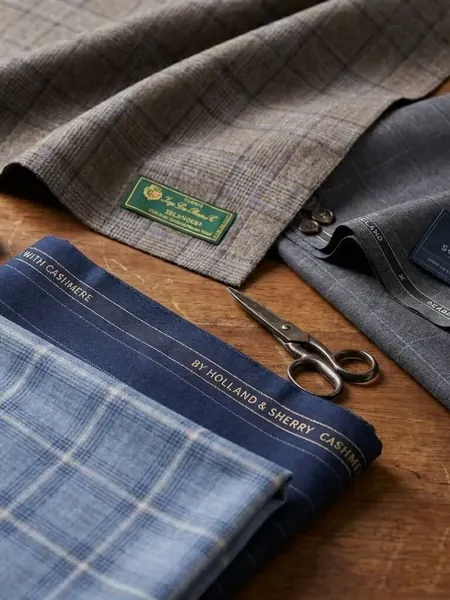
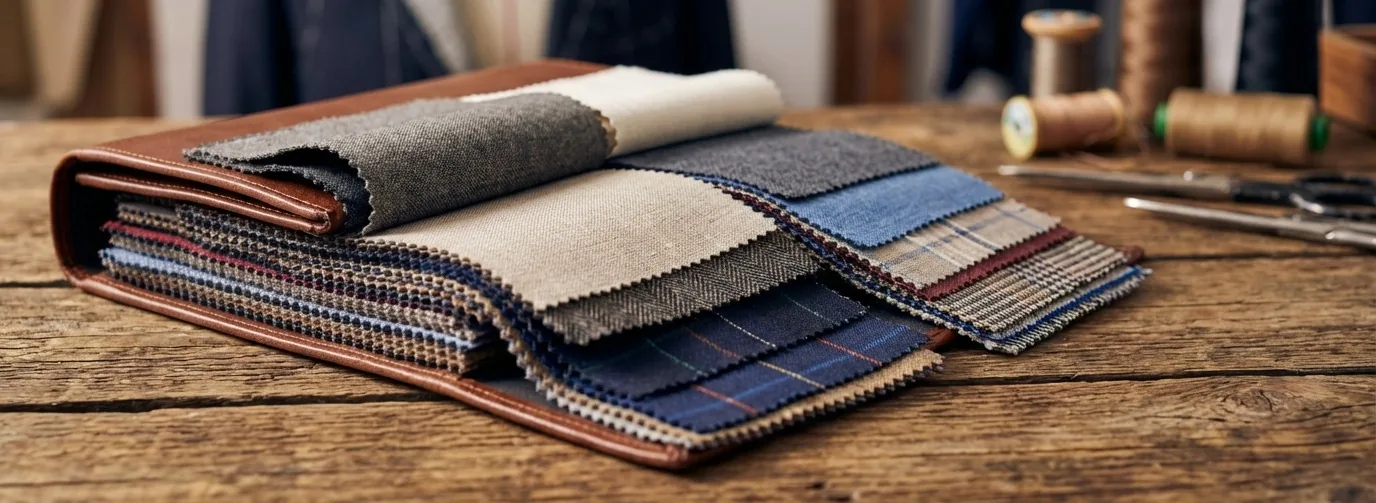
A subtle texture - a birdseye, a sharkskin, a soft herringbone - adds depth to photographs without competing with the rest of the wedding party's outfits. Bold patterns can date a photograph quickly; texture tends to age better. You can browse our full range of wedding-appropriate cloths from the mills we work with.
Matching cloth to your venue and setting
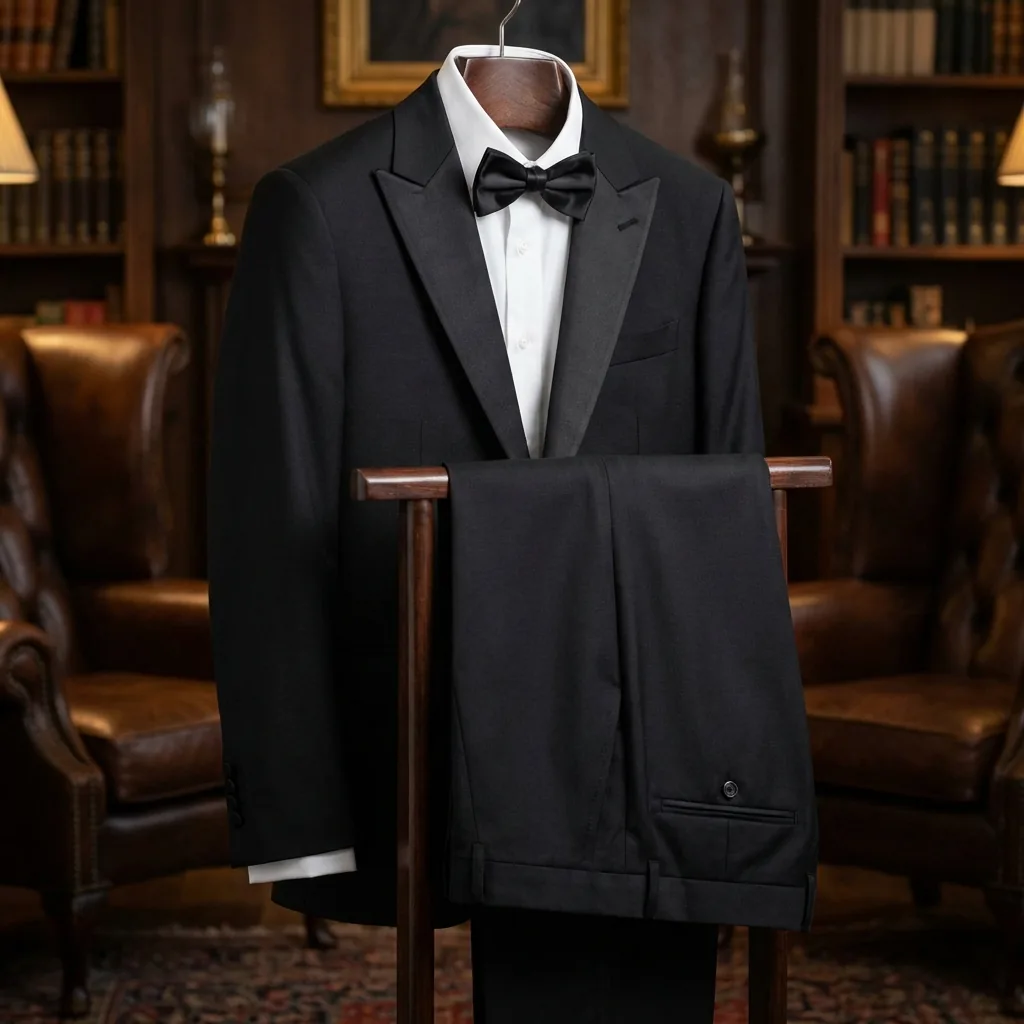
The right wedding suit fabric is partly a response to where you are getting married. A marquee or garden ceremony in high summer rewards a breathable, lighter-weight cloth that will not leave you visibly wilting during the speeches, while a grand country house or a winter church wedding can carry a heavier, more textured cloth beautifully. Coastal and outdoor settings tend to bring stronger, more variable daylight, which flatters mid-tones and richer colours; low-lit historic venues and evening receptions are more forgiving of darker cloth but less kind to very pale shades.
It is worth thinking about the whole day rather than a single moment. Many weddings move from an outdoor ceremony to an indoor reception and on into the evening, and your suit has to look considered across all of it. This is one of the reasons a versatile mid-navy or charcoal in a quality wool remains such a dependable choice - it holds up across changing light rather than looking perfect in one setting and wrong in the next.
Coordinating with the wedding party
A groom's suit should relate to the wider wedding party without disappearing into it. If groomsmen are in a standard colour, subtle distinction rather than dramatic contrast tends to read best in photographs - a different texture, a slightly richer tone of the same colour, or a considered detail such as a contrasting lining or a different lapel style. The aim is for the groom to look unmistakably like the groom without the coordination feeling like a uniform.
Where a wedding has a defined palette, bringing swatches of the bridal party's colours to your fabric selection is genuinely useful. Your tailor can then choose cloth, lining and detailing that sit harmoniously alongside them rather than clashing in the final photographs. Small choices - the shade of a waistcoat, the colour drawn out in a lining - are where a bespoke commission quietly earns its keep on a wedding day.
Fabric and the shape of the suit
Cloth and cut are not separate decisions. A crisp, higher-twist worsted holds a sharp, structured silhouette and suits a formal, tailored look, while softer flannels and wool blends drape more gently and lend themselves to a relaxed, natural-shouldered style. Choosing a fabric without considering the shape you want can leave you with a cloth that fights the design rather than supporting it, so it is always worth discussing the two together from the outset.
Weave also affects how a suit ages across a long day. Higher-twist yarns resist creasing and recover their shape well after hours of sitting and dancing, which is exactly what a wedding demands of them. This is why very inexpensive, loosely woven cloth so often looks tired by the evening - it simply has not been engineered to perform under that much movement.
Planning your timeline
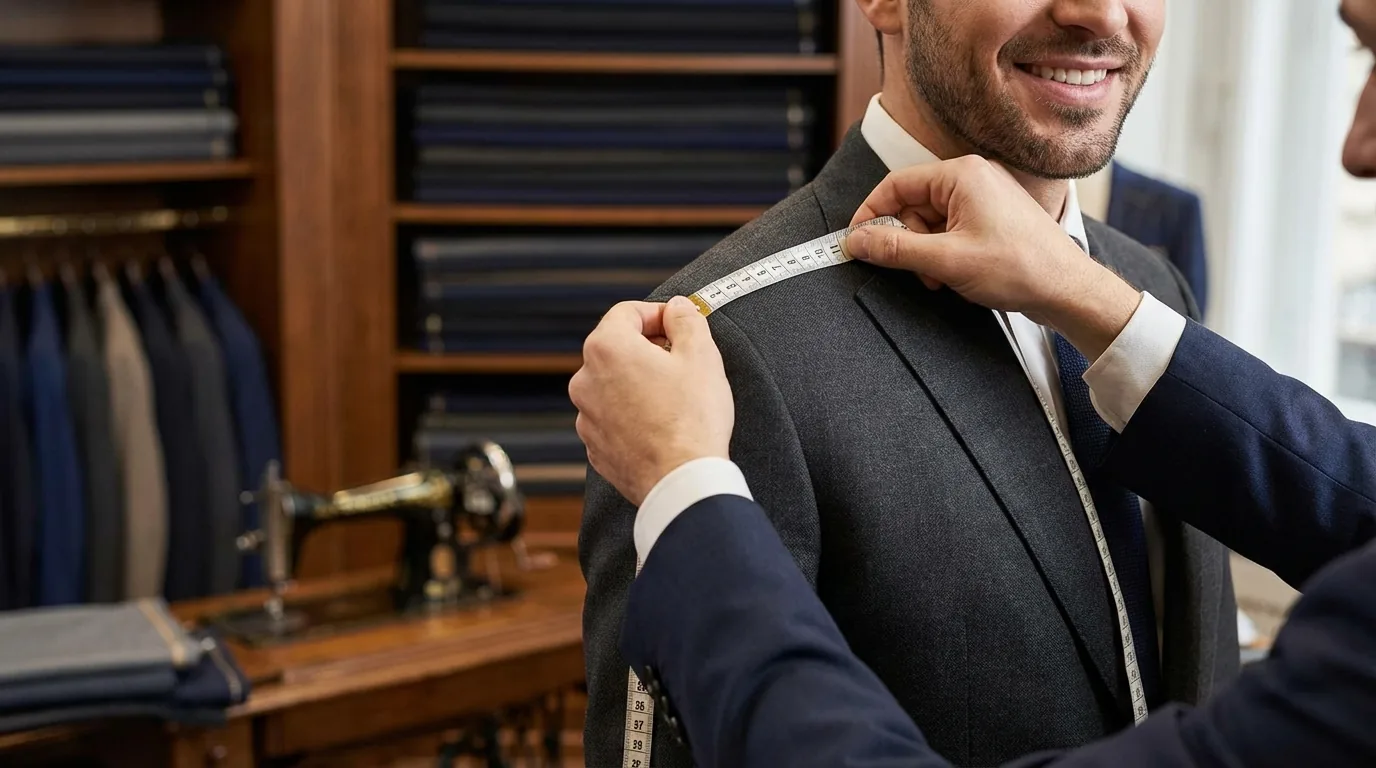
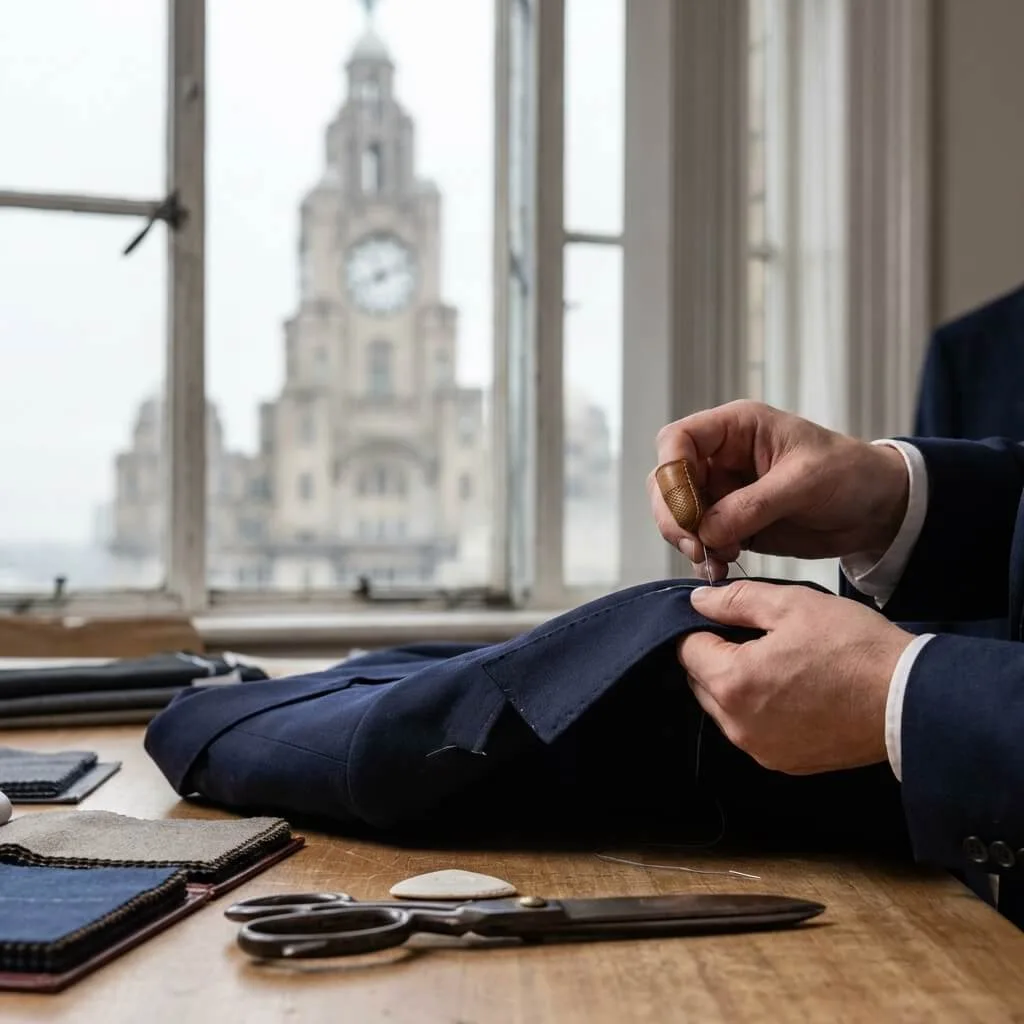
Because a bespoke wedding suit is cut from your own pattern and fitted over several appointments, it rewards starting early. Allowing a comfortable window - typically several months before the day - means there is time for the full fitting process without pressure, and room to make considered choices about cloth and detailing rather than rushed ones. It also leaves margin for any final adjustments as the date approaches. If you would like to understand how the appointments unfold, our step-by-step process sets it out in full.
Whatever you choose, bring it into natural light before deciding. Fabric that looks right under a shop's lighting can shift entirely once you see it outdoors - which is exactly the environment most wedding photographs are taken in.